
Spotlight on The Mahjong Project: A game that brings people together
At Oakland Bloom, we believe that food is political expression and healing. Food is culture, and it’s community.
Our community hub in Oakland Chinatown, called Open Test Kitchen, is a place for neighbors to gather and be themselves. If you are anything like us, whenever we invite people over, we all end up crowded and laughing in the kitchen. Over the next few months, we want to introduce you to the partners and collaborators who have brought more people to our kitchen and made it their own.
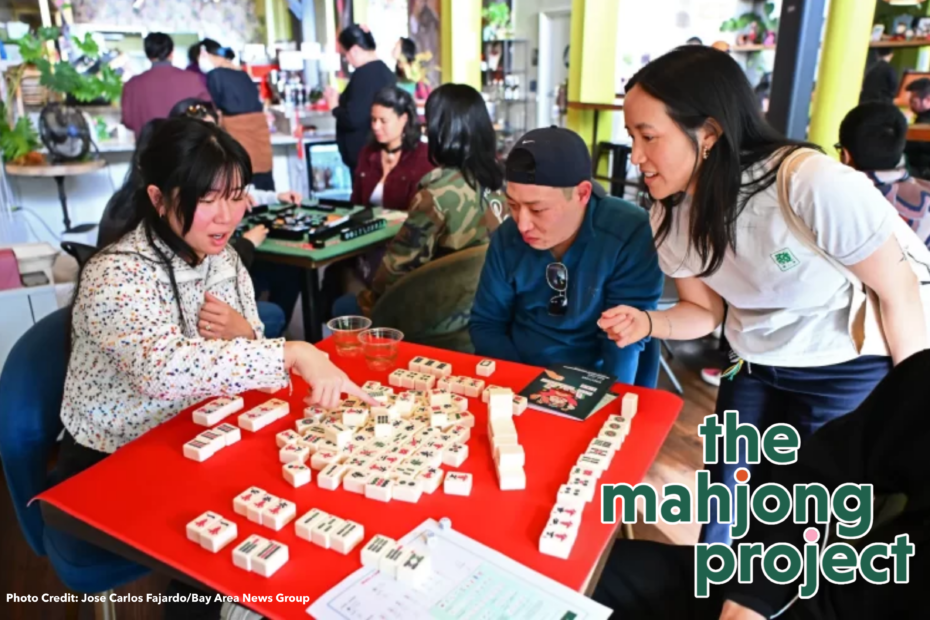
Following up on a Mahjong & Mooncakes event last fall, The Mahjong Project and Oakland Bloom recently kicked off 2026 Lunar New Year celebrations with an afternoon of mahjong, dim sum and sweets, red envelopes and a calligraphy activity. We talked to Nicole Wong, a writer and audio producer based in Oakland. She started The Mahjong Project in 2019 as an instructional guide and oral history project and now has a book out, Mahjong: House Rules from Across the Asian Diaspora. We talked to Nicole about the origins of The Mahjong Project and how she brings the game to more people in community spaces like Open Test Kitchen. This interview has been edited for length and clarity.
Oakland Bloom: To kick things off, how did your partnership with Oakland Bloom start?
Nicole Wong: I met Diana Wu [from Oakland Bloom] at a community event. I was invited to bring mahjong to a Lantern Festival and it grew from there. We had our first event last October, though there was an informal group playing mahjong at Open Test Kitchen for some time. Our mid-autumn event was part of a global day of playing. Mahjong clubs across the diaspora were holding hyper local events all at the same time. At our event, we also sourced eight flavors of mooncake from Napoleon Super Bakery, a local decades-old bakery, and hosted a mooncake tasting.
I’m very drawn to places where younger people and older people can come together, such as bookstores, cafes like Open Test Kitchen and public libraries.
OB: You describe The Mahjong Project as part oral history project. As we’ve been talking to different partners, many have shared how they use food, music or art to tell stories. Can you share more about your approach?
NW: I wanted to know how to play [mahjong]. I decided to make it a writing and storytelling project, too. When I played and talked with my parents, aunts and uncles, I’d get to hear stories about their lives. At events, that happened too. As they were playing, people told me about how and when their families immigrated to the U.S.
I began interviewing people in the community. The conversations would start as being about mahjong, but it just ends up being about their life. Some people talked for hours. My book shares some of those stories, and I continue to gather community stories through the game.
OB: Where has the book taken you? How have people engaged with it?
NW: I’ve met so many more people. The universality of this game brings people together. The book is helping people return to the game and teach their kids. One woman told me that when she visits her 90-year-old mom in a senior living center her mom says, “bring that pink book and let’s play mahjong.”
I compare mahjong to a folk tradition. Think about the tactile and sensory games that you used to play as a kid or the games specific to your family. I associate mahjong with my family. When we played, I talked to my parents more. It’s a way to spend time with people without intense pressure. You can play at home or out. You watch other people’s eyes and exchange things with your hands. It’s regenerative. That’s why I’m doing this work.
OB: How can people get involved if they want to play mahjong or any game more?
NW: It’s fun to play and to teach people to play. Host a party for people to play together. Check out places like Open Test Kitchen. It’s great that there are places like this. It’s a win-win for everyone.